Glass ornaments offer the most traditional shine but break easily, ceramic ornaments hold intricate hand-painted detail but chip if dropped, and wood ornaments resist breakage almost entirely while offering a rustic, matte finish. Your choice should depend on how the ornament will be handled, whether it needs to survive shipping, and whether you have young children or pets near the tree. Each material has a distinct manufacturing process, price range, and lifespan, and understanding those differences prevents disappointment when a $40 hand-blown piece shatters on its first Christmas Eve.
According to the American Christmas Tree Association's 2025 holiday decor survey, more than 94 million U.S. households decorate a tree each year, and ornament breakage ranks among the top five reported holiday frustrations. That makes material selection a practical decision, not just a style preference.
Key Takeaways
● Glass ornaments are the most fragile but offer the most reflective, traditional shine, with hand-blown pieces running $15 to $75 each.
● Ceramic ornaments are heavier (typically 3 to 6 ounces), hold fine painted detail, and chip rather than shatter, priced around $10 to $40.
● Wood ornaments are nearly shatterproof, lightweight (often under 1 ounce), and cost $6 to $25, making them the safest option for shipping and homes with kids or pets.
● Decoration method follows material: glass is often hand-painted or dipped, ceramic is kiln-glazed, and wood is typically laser-cut or hand-stained.
● Storage matters as much as material. Glass needs individual padded slots, ceramic needs stacked separation, and wood tolerates loose storage with almost no damage risk.
What Makes Glass Ornaments Different?
Glass ornaments get their shine from a thin, mouth-blown or molded glass shell coated with a silver nitrate solution on the inside, a technique that traces back to Lauscha, Germany, in the 1840s. That silvering is what creates the mirror-like reflection you see under tree lights. Mouth-blown European glass ornaments typically measure wall thicknesses of 0.5 to 1 millimeter, which is thinner than most drinking glasses and explains why a single drop onto a hardwood floor can end an ornament's life instantly.
Price ranges swing widely based on origin and craftsmanship. Machine-pressed glass ornaments from large manufacturers run $5 to $15 each, while hand-blown, hand-painted pieces from workshops in Germany or the Czech Republic can run $25 to $75. The difference is almost entirely in labor, since a skilled glassblower may spend 20 to 30 minutes shaping and painting a single detailed piece by hand.
Shipping damage is the biggest downside. Per ShipStation's 2025 holiday carrier damage report, fragile glass items account for a disproportionate share of claims filed between November and January, with breakage rates climbing when items are not individually boxed with at least 1 inch of cushioning on all sides. If you are sending glass ornaments as gifts, specialty shapes like wine ornaments are worth padding heavily, since the narrow neck and bulb shape are more prone to cracking in transit than a standard round bauble.

What Makes Ceramic Ornaments Different?
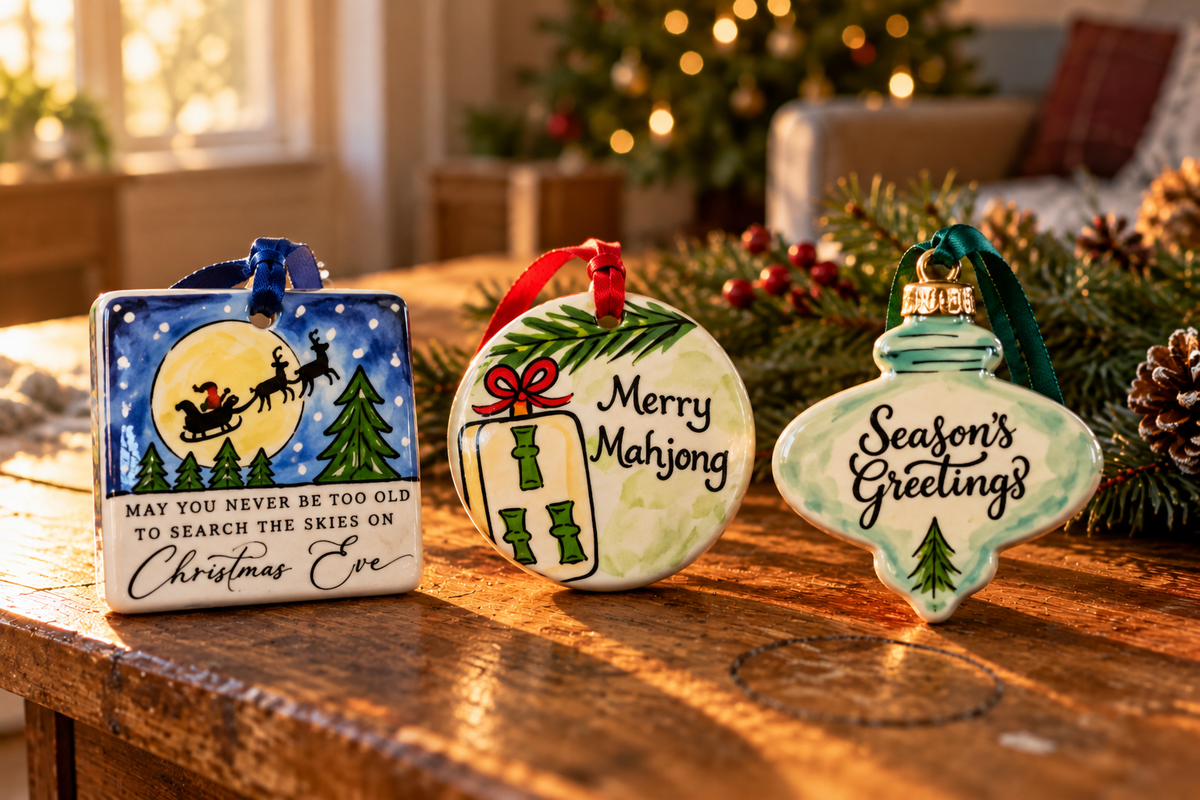
Ceramic ornaments start as wet clay pressed or poured into a mold, then fired in a kiln at temperatures between 1,945 and 2,167 degrees Fahrenheit (cone 04 to cone 06), which hardens the clay into a durable, stone-like body before a second firing sets the glaze. That firing process is why ceramic can hold crisp detail, raised textures, and layered paint colors that thin glass cannot replicate as cleanly.
The tradeoff is weight. A typical ceramic ornament weighs 3 to 6 ounces, roughly three to five times heavier than a comparable glass piece, which means it needs a sturdy branch and a secure hook or it will slide off and drop. Ceramic also does not shatter into dozens of shards the way glass does. Instead, it tends to chip at thin edges or crack along a single fault line if dropped on a hard surface, which some buyers actually prefer because the damage is less dangerous around bare feet and curious pets.
Hand-painted ceramic ornaments are especially popular for personalized gifts because the glaze holds fine brushwork well, including names, dates, and pet likenesses. A personalized dog bone hand-painted ornament is a good example of how ceramic's surface takes detailed, custom artwork in a way that mass-produced glass rarely matches at a similar price point, typically $10 to $40 depending on the level of customization and size.
What Makes Wood Ornaments Different?
Wood ornaments are cut from thin sheets of birch, basswood, or bamboo plywood, usually about 1/8 inch thick, then shaped using laser cutting or scroll saws before being stained, painted, or left natural. Because wood flexes slightly instead of cracking under impact, these ornaments survive drops that would destroy glass or ceramic almost every time. That single property makes wood the clear winner for shatterproof durability.
Weight is another advantage. Most wood ornaments weigh under 1 ounce, which puts far less strain on tree branches and reduces the risk of an entire limb sagging under a cluster of heavier pieces. Pricing tends to run $6 to $25, with laser-engraved designs on the lower end and hand-painted or multi-layer wood pieces on the higher end. Rustic and woodland-themed sets have become especially popular in recent years. According to the National Retail Federation's 2025 holiday trends report, natural and sustainable materials saw an 18 percent year-over-year increase in holiday decor searches, and wood ornaments benefit directly from that shift toward farmhouse and cabin-style trees.
For buyers who want a full set with a consistent theme, something like the woodland collection ornament package offers a practical way to fill a tree with matching, durable pieces instead of mixing individually sourced wood ornaments that may not share a finish or color palette.

Ceramic vs. Glass vs. Wood: How Do They Compare Side by Side?
The table below lines up the three materials across the factors that matter most when you are actually decorating, shipping, or storing ornaments year after year.
|
Factor |
Glass |
Ceramic |
Wood |
|
Typical weight |
Under 1 ounce |
3 to 6 ounces |
Under 1 ounce |
|
Price range |
$5 to $75 |
$10 to $40 |
$6 to $25 |
|
Breakage type |
Shatters into shards |
Chips or cracks |
Rarely breaks |
|
Shipping risk |
High |
Moderate |
Low |
|
Finish options |
Reflective, painted, mercury glass |
Glazed, hand-painted, matte bisque |
Stained, painted, laser-engraved, natural |
|
Best suited for |
Display trees, collectors |
Personalized keepsakes |
Kids, pets, mailed gifts |
Which Material Should You Choose If You Are Shipping Ornaments as Gifts?
Wood is the safest choice for mailed ornaments because it is genuinely shatterproof in most real-world handling scenarios, including bumps during ground shipping and rough sorting at distribution centers. Ceramic can survive standard shipping if wrapped with at least 2 inches of bubble wrap and boxed with minimal internal movement, but it still carries meaningful chip risk if a box is dropped from more than 3 feet. Glass should only be shipped in double-walled boxes with individual cell dividers, and even then, some loss should be expected during the busiest shipping weeks between Thanksgiving and December 20, when carrier volume peaks and handling becomes less careful.
If an ornament needs to survive a cross-country shipment, a curious toddler, and a dog's wagging tail in the same season, wood is almost always the practical answer.
How Does the Decoration Method Differ by Material?
Each material pairs with a different decoration technique, and that pairing affects both cost and how the finish looks up close.
● Glass is typically hand-painted with enamel paint after the piece is blown and silvered, or it receives a sprayed frost or glitter coating. Mercury glass, a term that actually refers to the silvered interior finish rather than any real mercury content, relies on light reflecting through the glass itself rather than surface paint.
● Ceramic is decorated before or after the glaze firing. Underglaze painting goes on raw bisque and gets sealed by a clear glaze in the kiln, which protects the artwork permanently. Overglaze painting sits on top of an already-fired glaze and can wear with heavy handling over many years.
● Wood uses laser engraving for fine linework, acrylic paint for bold color blocks, or wood stain for a natural, grain-visible finish. Laser engraving burns the design directly into the surface, so it cannot peel, fade from sun exposure, or scratch off the way painted designs eventually can.
Which Material Is Best for Homes With Kids or Pets?
Wood wins by a wide margin for households with toddlers, cats, or dogs that treat the lower branches of a tree as a toy box. Ceramic is the middle option since a dropped piece is unlikely to create the sharp shard hazard that broken glass does, though a chipped edge can still scratch skin or paws. Glass should go on the top two-thirds of the tree in any home with young children or pets, reserving the lower branches for wood or soft fabric ornaments instead.
Per the Consumer Product Safety Commission's seasonal injury data, emergency rooms see a measurable rise in laceration visits tied to broken holiday decorations each December, with glass ornaments and string light glass bulbs cited most often. That is not a reason to avoid glass altogether, but it does support placing it thoughtfully rather than mixing it randomly throughout the tree.
How Should You Store Each Material Between Seasons?
Storage habits affect ornament lifespan as much as the material itself does.
1. Glass needs individual compartments in a padded ornament storage box, ideally with at least 1 inch of foam or tissue separating each piece, since even glass touching glass in storage can cause hairline cracks over time.
2. Ceramic should be wrapped individually in tissue or soft cloth and stacked no more than two pieces high in a single compartment, since the weight of stacked ceramic can crack a piece on the bottom of the pile.
3. Wood tolerates loose storage in a simple bin or bag with almost no risk of damage, though keeping it away from damp basements prevents warping over several years of humidity exposure.

Things to Know
● The term mercury glass does not involve actual mercury. It describes a 19th-century silvering process using silver nitrate, and the name stuck even after the original method changed.
● Ceramic ornaments often weigh enough that a plastic ornament hook can bend or straighten out over a season, so metal hooks rated for at least 8 ounces hold up better.
● Wood ornaments with a raw, unsealed finish can absorb moisture near a humidifier or a window with condensation, so a light clear sealant coat extends their lifespan.
● Many hand-blown glass ornaments are still produced using molds from the Dresden and Lauscha regions of Germany that date back more than a century, according to the Christmas Ornament Collectors Club.
● Laser-cut wood ornaments typically cost less to produce in bulk than hand-painted ceramic, which is part of why wood ornament sets often undercut ceramic sets on price despite similar design complexity.
Frequently Asked Questions
Is ceramic or glass more likely to break on the tree?
Glass breaks far more easily than ceramic. Glass shatters on contact with hard flooring, while ceramic typically chips or cracks along one line and often survives a short fall onto carpet entirely intact.
Are wood ornaments actually shatterproof?
Yes, in practical terms wood ornaments do not shatter. A thin wood piece can snap or crack under extreme force, but normal drops, shipping bumps, and pet contact rarely cause any damage at all.
Which ornament material is best for personalized gifts?
Ceramic typically holds personalized detail the best. The glaze firing process locks in fine brushwork, names, and dates permanently, which is why hand-painted ceramic keepsake ornaments remain popular for baby's first Christmas or pet memorial gifts.
Do wood ornaments fade or crack over time?
Unsealed wood can fade slightly in direct sunlight over several years, but it rarely cracks. A light clear coat of sealant applied once protects both the color and the wood grain from humidity-related warping.
What is the actual difference between hand-blown and machine-pressed glass ornaments?
Hand-blown glass is shaped by a glassblower one piece at a time, while machine-pressed glass is formed in molds at high volume. Hand-blown pieces cost more, often $25 to $75, and show slight size and shape variation, while machine-pressed ornaments run $5 to $15 and look nearly identical to one another.
Final Thoughts
No single material wins outright, since the right choice depends on where the ornament will hang, who else lives in your house, and whether it needs to survive a trip through the mail. Glass remains the most visually striking option for a formal, adult-only display tree, especially mercury glass or hand-blown pieces that catch light on higher branches. Ceramic offers the best balance of durability and fine detail for personalized keepsakes you plan to keep for decades, like a hand-painted baby's first Christmas ornament or a family name piece passed down each year. Wood delivers the most reliable protection for busy households, shipped gifts, and anyone who wants a natural, rustic look that will not end up in pieces on the living room floor by New Year's Day. If you're buying for a home with toddlers, pets, or a tree that gets shipped across the country, wood or sturdy ceramic beats glass every time. For a tree meant purely for show, glass still earns its reputation.
Share:
10 Christmas Ornament Gift Ideas for Dog Lovers and Pet Parents